Language


 IF
IF
 z-bio
z-bio
 2025-07-14
 5027
5027
In 2025, Nanjing University continued to make efforts in the field of
scientific research. According to statistics, the school published 93 academic
documents with an impact factor of more than 10 points this year. These
achievements cover many cutting-edge fields such as chemical synthesis,
neuroscience, cancer immunotherapy, aging and disease mechanisms, liver disease
and nanobiomedicine, and demonstrate their deep accumulation and innovative
vitality in basic research and application transformation.
Just around 5 months, several breakthrough studies were published in top
journals such as Nature, and we selected several excellent articles to
share.
Nature
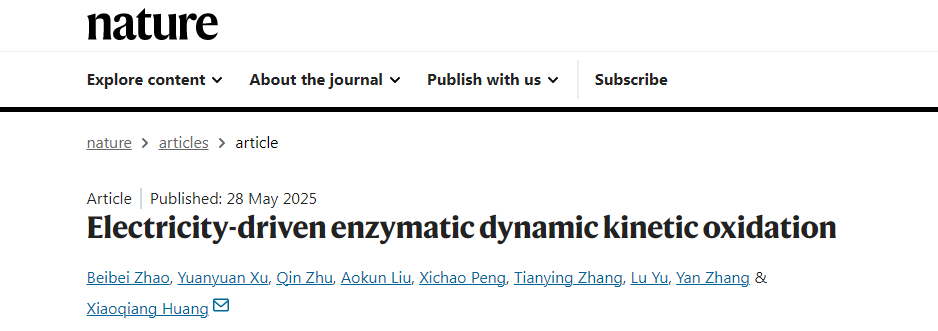
On May 28, 2025, Huang Xiaoqiang, a distinguished researcher at the School
of Chemistry and Chemical Engineering of Nanjing University, published a
research paper entitled "Electricity-driven energy dynamic kinetic oxidation" in
the world's top scientific research journal Nature.
By combining electrocatalysis and enzyme catalysis, the research team
successfully developed a new catalytic capability of ThDP-dependent enzymes,
achieving a new dynamic kinetic oxidation conversion from aldehyde to chiral
carboxylic acid. This result established a new paradigm of asymmetric synthesis
of "electrodriven enzyme catalysis" and opened up a new path for asymmetric
biosynthesis of phenypropionic acid drugs.
This study focuses on solving the limitations of electrochemistry and
enzyme binding (previously mainly replicated known enzyme functions, facing
compatibility and heterogeneous electron transfer problems), and transformed
thiamine-dependent enzymes through ferrocene-mediated electrocatalysis,
successfully achieving non-natural dynamic kinetic oxidation of α-branched chain
aldehydes.
This electroenzyme method can efficiently generate a variety of
biologically active (S)-profen compounds, with enantiomer overdose up to 99%; it
is suitable for whole-cell systems that overexpress target enzymes, and the
amount of enzyme used is extremely low (only 0.05 mol%).
Mechanism research further reveals that the modified electroenzymes have
multiple functions at the same time - accurately identifying substrates,
accelerating racemicization processes, and promoting kinetic matching electron
transfer, providing theoretical support for its efficient catalysis.
Nature Neuroscience
On May 27, 2025, Professor Yan Chao of Nanjing University, Professor Cong
Qifei of Suzhou University, Director Liu Xiangyu of the Department of
Neurosurgery of Nanjing Gulou Hospital and Professor Li Xinjian of Zhejiang
University published a research paper titled "GABA-dependent microglial
elimination of inhibitory synapses underlies neuronal hyperexcitability in
epilepsy" online at Nature Neuroscience (IF=20).
This research system reveals the molecular mechanism in which microglia
selectively "prune" inhibitory synapses, causing excitation/inhibition
imbalances, thereby promoting the progress of epilepsy.

Neuronal hyperexcitation is a common pathophysiological feature of many
neurological diseases. Neuron-glial interactions are the basis of this process,
but the detailed mechanisms are still unclear.
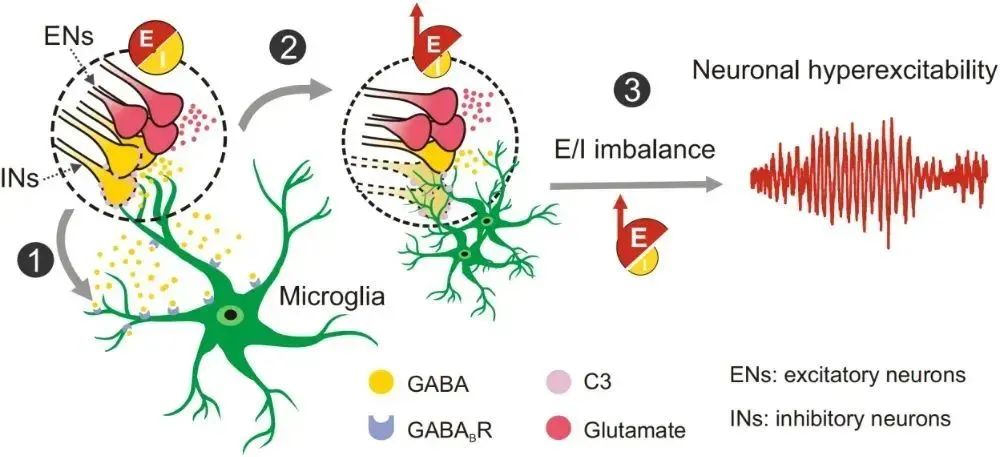
The study found in a mouse epilepsy model that when epilepsy occurs,
inhibitory neurons release a large amount of GABA. This substance that should
have an inhibitory effect activates microglia through the GABAB receptor,
guiding microglia closer to inhibitory synapses like a "signal flare". At the
same time, complement C3 secreted by astrocytes will "mark" the inhibitory
synapses, allowing microglia to accurately swallow these "connection structures"
that can balance nerve excitation. The results lead to a continuous reduction of
inhibitory synapses, an increase in brain excitation-inhibition imbalance, and
aggravated epilepsy symptoms; while blocking GABAB receptors or complement C3
can reduce phagocytosis and relieve symptoms.
The research team further verified this mechanism in the brain tissues of
epilepsy patients: the microglia in the patient's brain are also more sensitive
to GABA, have stronger phagocytosis, and have a large number of phagocytosis
inhibitory synapses, and interact with inhibitory neurons more frequently. This
discovery not only clearly reveals the interaction mechanism between neurons and
glial cells in the development of epilepsy, but also provides scientific basis
for the development of new therapies targeting such interactions.
Molecular Therapy
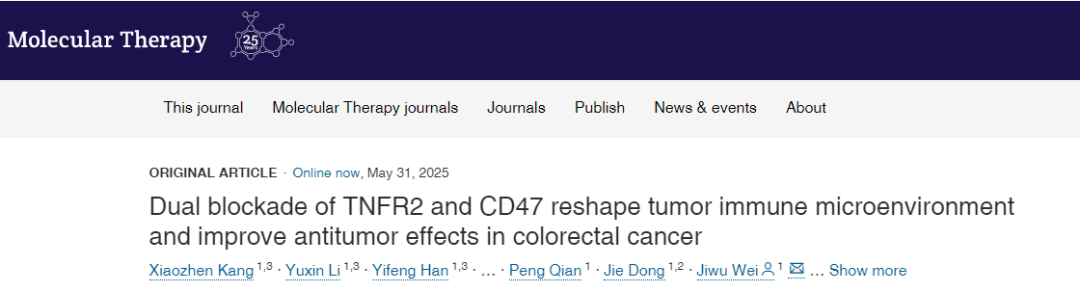
On May 30, 2025, Wei Jiwu's team from Nanjing University published a
research paper titled "Dual blockade of TNFR2 and CD47 reshape tumor immuno
microenvironment and improve antitumor effects in colorectal cancer" online in
the journal Cell and Gene Therapy (IF=12).
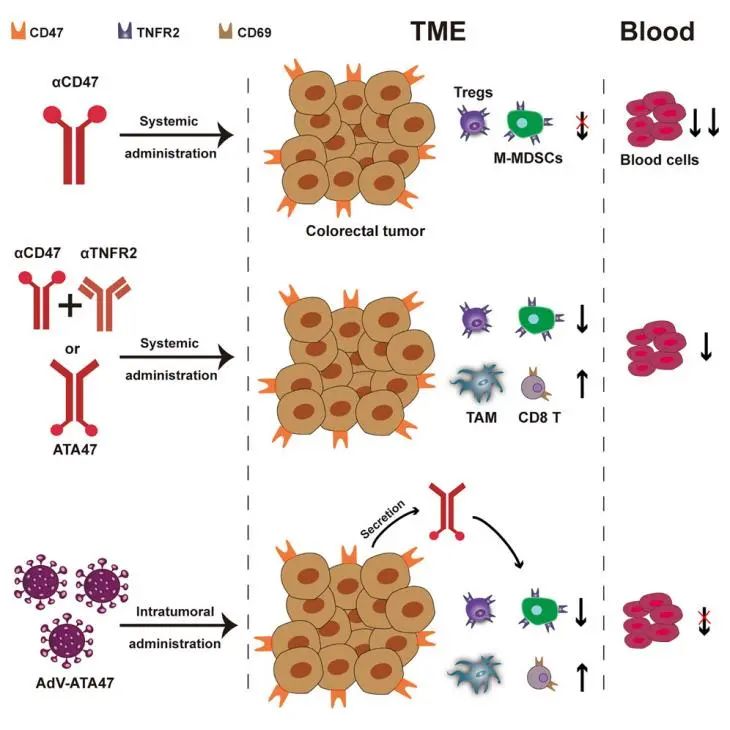
The research team innovatively proposed a new strategy of "dual target +
local delivery", and designed a bispecific antibody ATA47-CD47, which blocks
CD47 and TNFR2 simultaneously to restore macrophage phagocytosis, and TNFR2
blockade reduces immunosuppressive cell infiltration. The two jointly enhance
anti-tumor immunity, and have better effects than traditional combination
therapy, lower side effects, and simplified administration.
Further integrate the ATA47 gene into oncolytic adenovirus to construct
AdV-ATA47, realize in situ delivery of tumors, and accurately release ATA47 with
the help of the virus's priority infecting tumor cells, avoid off-target risks,
activate CD8⁺T cells and macrophages to form a collaborative immune network,
providing a safer and more efficient solution for CRC immunotherapy, and is
expected to jointly improve the possibility of cure with other therapies.
Nature Aging
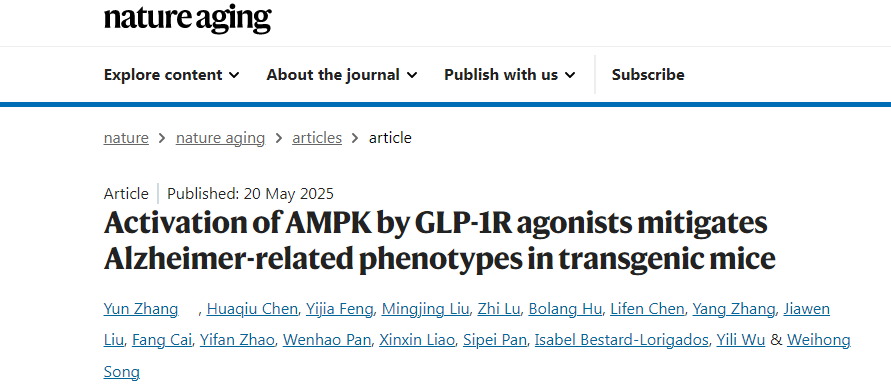
On May 20, 2025, the team of Zhang Yun, a researcher at the Gulou Hospital
Affiliated to Nanjing University School of Medicine (Chen Huaqiu and Feng Yijia
are the co-first authors) and Academician Song Weihong, Dean of the Institute of
Geriatrics of Wenzhou Medical University and Director of the Oujiang Laboratory,
published a research paper entitled "Activation of AMPK by GLP-1R agonists
mitigates Alzheimer-related phenotypes in transgenic mice" on Nature Aging
(IF=19.4).
The study found that GLP-1 receptor agonists (GLP-1RAs) can reduce Aβ
generation, inhibit neuroinflammation and promote Aβ phagocytic by microglia,
thereby alleviating the relevant pathological phenotypes of AD model mice,
revealing the mediating role of AMPK and providing new potential targets and
ideas for AD treatment.
Hepatology
Hepatology, Professor Li Zilong's team from the Institute of Brain Science
and Brain-like Research Institute of Shandong First Medical University, and
Director Li Jie's team from Nanjing Gulou Hospital and Associate Researcher Kong
Ming of China Pharmaceutical University jointly published a research paper
entitled "Pre-B-Cell leukemia transcription factor 1 contributes to liver
fibrosis by enabling IL-7 signaling in hepatic stellate cells" in Hepatology
(IF=15.8).
The study found that the transcription factor PBX1 plays a key role in the
activation of hepatic stellate cells (HSCs): its expression is regulated by
Notch3, which promotes the transformation of HSCs into myofibroblasts by
activating IL7R (IL-7 receptor), thereby aggravating liver fibrosis; and IL7R
can interact with TGF-β receptors to amplify pro-fibrosis signals. Experiments
have confirmed that knocking down PBX1 or blocking IL-7-IL7R signal with
antibodies can all alleviate liver fibrosis in mice, and there is a positive
correlation between PBX1 and IL7R and HSCs activation in patients with
cirrhosis, verifying the clinical correlation of this mechanism.
This study not only reveals the new regulatory axis of "Notch3-PBX1-IL7R"
in the process of liver fibrosis, but also provides potential targets for the
intervention of liver fibrosis (such as IL-7-IL7R signal), providing a new
theoretical basis and experimental basis for the prevention and treatment of
end-stage liver disease.
Nature Nanotechnology
On February 18, 2025, Professor Ye Deju and Professor Xu Jingju of Nanjing
University published a research paper entitled "Tandem-controlled lysosomal
assembly of nanofibres induces pyroptosis for cancer immunotherapy" at Nature
Nanotechnology (IF=34.9).
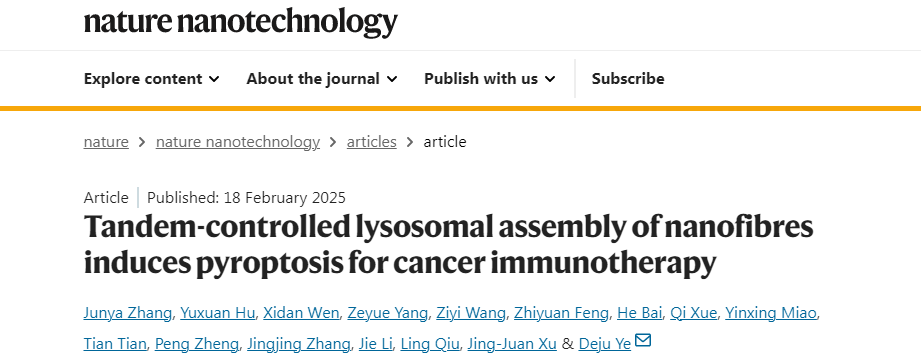
This study developed a tumor-specific nanoparticle NP-NH-D5 in response to
the problems of insufficient specificity of existing pyroptosis inducers and
weak anti-tumor immune response. Its core advantage is that it can respond to
specific signals of the tumor microenvironment (extracellular matrix
metalpeptidase-2 and intracellular reducing agents), complete charge reversal
and morphological transformation (from nanoparticles to nanofibers), thereby
accurately destroying the lysosome, triggering pyroptosis and causing strong
immunogenic cell death, while improving the tumor immunosuppressive
microenvironment.
In vivo experiments show that NP-NH-D5 can effectively inhibit the growth
of breast cancer, prevent metastasis and recurrence, and has no systemic side
effects; it can also enhance the efficacy of PD-L1 antibody in advanced
metastatic carcinoma and invasive pancreatic cancer. This study breaks through
the limitations of traditional pyroptosis inducers and provides new ideas for
the development of tumor-specific "stimulus-responsive" pyroptosis inducers,
which is expected to promote the development of precise cancer
immunotherapy.
From the new synthesis paradigm catalysis of electrodrive enzymes, to the
in-depth analysis of epilepsy pathogenesis, from innovative strategies for
immunotherapy for colorectal cancer, to potential intervention targets for
Alzheimer's disease and liver fibrosis, to nanotechnology breakthroughs in
precision tumor immunotherapy, these achievements have provided a new
perspective for the frontier exploration of disciplines, and also contributed
"Nanzhou University wisdom" to human health and social development.