Language


 肝癌细胞
肝癌细胞
 z-bio
z-bio
 2025-07-24
 5350
5350
Hepatocellular carcinoma (HCC) is a primary liver cancer that originates from hepatocytes and accounts for 90% of all liver cancer cases. Its advanced patients have limited response to existing therapies such as tyrosine kinase inhibitors and immune checkpoint inhibitors.
With the prevalence of metabolic dysfunction-related fatty liver disease (MASLD), the proportion of steatosis HCC has increased significantly (nearly 50%), so new treatment strategies are urgently needed. As a new cell death method driven by iron-dependent lipid peroxidation, ferrodystrophy has become an important target for cancer treatment in recent years.
On July 11, 2025, the team of Huang Zelei of the University of Hong Kong
published a research paper entitled "Mevalonate pathway promotes liver cancer by
suppressing ferroptosis through CoQ10 production and selenocysteine-tRNA
modification" in Journal of Hepatology (IF=33).
The study revealed that the mevalonate pathway inhibits iron death by
generating coenzyme Q10 (CoQ10) and regulating selenocysteine-tRNA modification,
thereby promoting the development of liver cancer. This discovery also provides
a new target for liver cancer treatment.
As a new cell death method, ferrodystrophy has been considered a potential
new direction for liver cancer treatment. Hepatocellular carcinoma cells rely on
the two systems of glutathione/GPX4 and CoQ10/FSP1 to resist ferrodysfunction,
while MVD, a key enzyme in the mevalonate pathway, can simultaneously regulate
the production of CoQ10 and the modification of selenocysteine-tRNA, thereby
affecting the function of these two anti-ferrodysfunction systems by generating
metabolites IPP.
The research team found that the mevalonate pathway is abnormally activated
in liver cancer (such as high MVD expression), and this pathway directly
participates in the resistance of liver cancer cells to iron death by affecting
CoQ10 synthesis and selenoprotein (such as GPX4) translation.
Therefore, the research team focused on the relationship between ferrous
death and liver cancer, and then revealed the mechanism of action of the
mevalonate pathway, providing a theoretical basis for targeted therapy.

Core mechanism: The dual carcinogenic effect of mevalonate pathway
The mevalonate pathway plays a dual role through the key enzyme MVD
(mevalonate diphosphate decarboxylase):
● Catalytic generation of IPP: MVD converts mevalonate diphosphate (MVAPP)
into isoprene pyrophosphate (IPP). IPP is not only a precursor for the synthesis
of CoQ10 and a key raw material for selenocysteine-tRNA modification. CoQ10
directly inhibits iron death by reducing lipid peroxides.
● Dual anti-ferrode mortality effect: On the one hand, IPP promotes the
production of CoQ10 and enhances the lipid peroxide scavenging ability; on the
other hand, it catalyzes the formation of i⁶A₃₇ modification through TRIT1
enzyme to ensure the translation efficiency of selenoproteins such as GPX4.
When MVD function is inhibited, the reduction of IPP generation will
simultaneously lead to a decrease in CoQ10 levels and GPX4 translation
disorders, which doublely weakens the anti-ferrodysfunction ability of liver
cancer cells, ultimately induces ferrodysfunction and inhibits tumor
progression.
Verification of key experimental results
Clinical sample analysis showed that the MVD expression in tumor tissues of
62.7% of liver cancer patients was more than 2 times higher than that of normal
tissues, and the high MVD expression was significantly correlated with the
adverse prognosis of the patients (confirmed by the TCGA database and the Mary
Hospital cohort in Hong Kong). Spatial transcriptome technology further
confirmed that the mevalonate pathway is specifically activated in liver cancer
tissues.

Through cell experiments and animal models, it was found that after
knockdown or knockdown of MVD, the decrease in IPP level directly leads to a
decrease in CoQ10 synthesis. At the same time, the hindered modification of
i6A37 makes Sec-tRNA unstable, resulting in inhibition of selenoproteins such as
GPX4 and TXNRD1.
The ribosome map shows that MVD deletion causes ribosomes to stagnate at
the UGA codon (selenocysteine insertion site) of GPX4, further confirming the
existence of translation obstacles.
In addition, knockout of TRSP (encoding Sec-tRNA) or TRIT1 (catalytic i6A
modification) can directly block selenoprotein translation, induce ferrous death
and significantly inhibit tumor growth and lung metastasis.
Exploration of treatment strategies
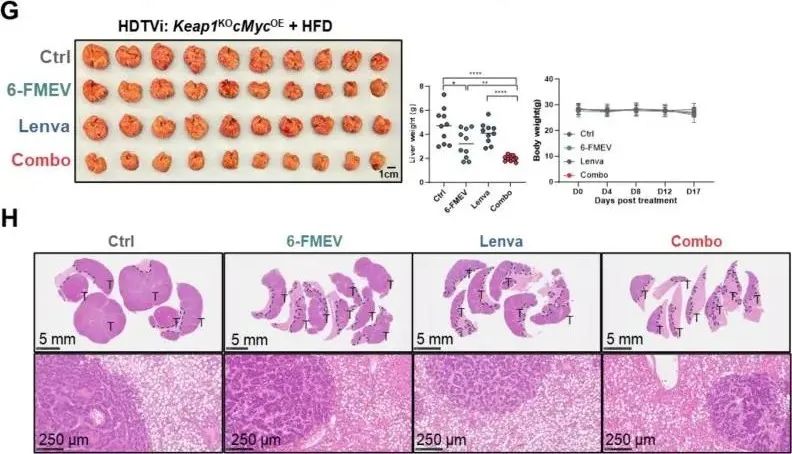
MVD inhibitor 6-FMEV can reduce CoQ10 levels and hinder selenoprotein
translation by competitively inhibiting MVD activity. In in situ, subcutaneous
and steatinized liver cancer models, iron death can be effectively induced and
tumor growth can be inhibited. Even drug-resistant backgrounds such as TP53
mutation or NRF2 over-activation will not affect its effect.
Statins such as atorvastatin inhibit HMGCR, the upstream enzyme of mevalonate pathway, produce similar effects to 6-FMEV, and synergistically with existing therapies.
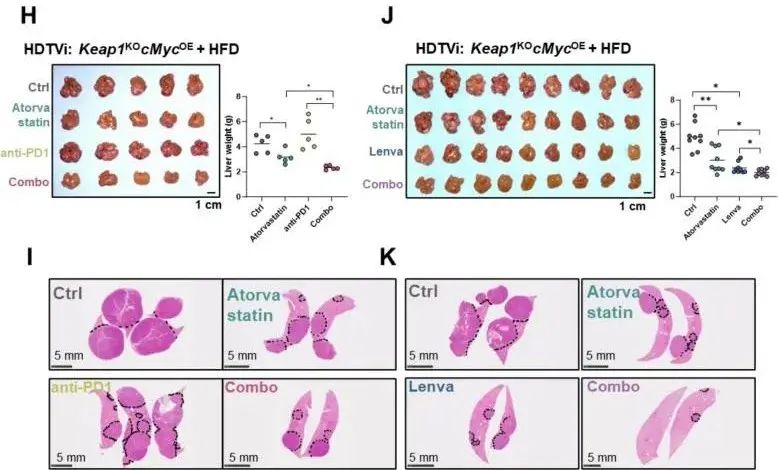
In addition, the combination of 6-FMEV or statins with TKI (such as
lenvatinib) can enhance the ferrodysemia induction effect and overcome TKI
resistance, while statins combined with anti-PD1 immunotherapy can significantly
inhibit steatinized liver cancer and improve immunotherapy response.
This study provides multiple potential strategies for liver cancer
treatment:
Targeted MVD: The MVD inhibitor 6-FMEV is highly specific and can avoid
side effects such as myotoxicity of statins. It is suitable for refractory liver
cancer (including steatosis subtypes).
New use of old drugs: Statins are low in cost and widely used in clinical
practice. The combination of their combination with TKI or ICIs is easy to
quickly convert into clinical treatment.
Biomarker guidance: The expression levels of MVD or GPX4 can be used as
biomarkers to screen patients who are most likely to benefit from targeted
treatment of mevalonate pathway to achieve individualized treatment.
In the future, the mevalonate pathway is expected to become a key target
for liver cancer treatment and promote the innovation of liver cancer treatment
models.