Language



 z-bio
z-bio
 2025-11-17
 4287
4287
Professor Hu Hailan, Dean of the School of Brain Science and Brain Medicine at Zhejiang University, has long been engaged in the molecular and neural circuit mechanisms of emotion and social behavior. She is a valid candidate for the 2025 academician election of the Chinese Academy of Sciences. This is the third time she has been shortlisted for the candidate list. She has led her team to continue to make breakthroughs in the pathogenesis of depression and the neural basis of social competition. She has published many top-notch results. She has recently published the latest research in authoritative journals such as Cell and Neuro.

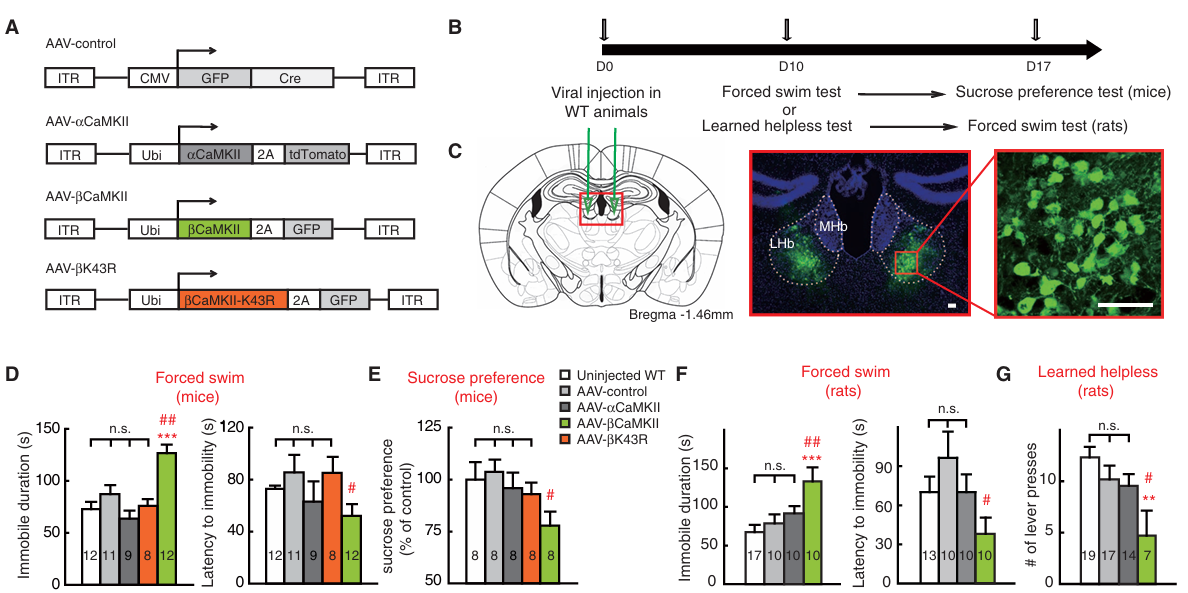
1. Science, thesis title βCaMKII in Lateral Habenula Mediates Core Symptoms of Depression, locks in the core regulatory molecules of depression, and βCaMKII becomes a key antidepressant target
Core highlights: The molecular regulatory mechanism of depression has long lacked clear targets, and traditional treatments have limited effects. Hu Hailan's team found that βCaMKII expression was significantly up-regulated in the lateral habenula (LHb) of animal models of depression, and was reversely regulated by antidepressants. This molecule can strongly enhance the synaptic efficacy and peak output of LHb neurons, and increasing its level alone can induce severe depressive symptoms; while downregulating its expression, blocking activity, or inhibiting the target molecule glutamate receptor GluR1 can effectively reverse depressive symptoms. This discovery clarifies the core position of βCaMKII as a regulator of LHb neuron function and a key determinant of depression, and provides a precise molecular target for the development of antidepressant drugs.
Author information: Professor Hu Hailan is the corresponding author, and the team from the School of Brain Science and Brain Medicine of Zhejiang University is the core completing unit.
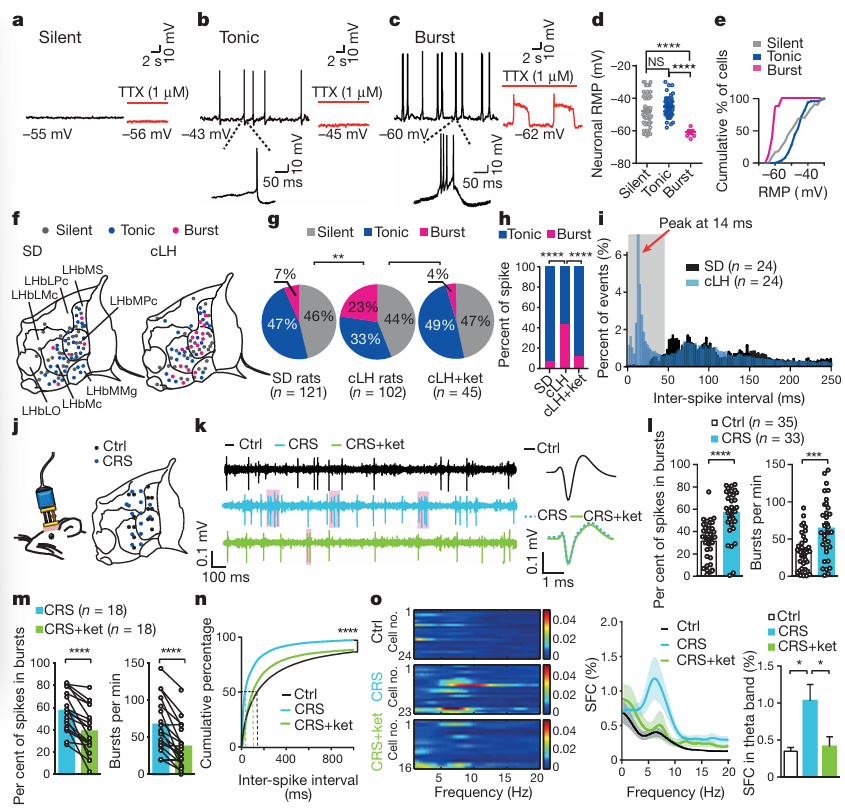
2. Nature, thesis title: Ketamine blocks bursting in the lateral habenula to rapidly relieve depression, cracking the mystery of ketamine’s rapid antidepressant, and opening up a new path for the cluster discharge mechanism
Core highlights: Traditional antidepressants have slow onset of action and low response rate. Ketamine’s rapid antidepressant effect lacks a clear mechanism explanation. Hu Hailan's team discovered for the first time that cluster discharges in the lateral habenula (LHb), the "anti-reward center" of the brain, are sufficient conditions for the occurrence of depression. This special discharge pattern will strongly inhibit the "reward center" and trigger depression. The core function of ketamine is to directly prevent the cluster discharge of LHb and quickly relieve its inhibition on the "reward center", which can improve depression symptoms within 40 minutes. The study also revealed that T-type calcium channels (T-VSCC) can be used as a new antidepressant target, providing key theoretical support for the development of fast-acting antidepressant drugs.
Author information: Professor Hu Hailan is the corresponding author, and the team from the School of Brain Science and Brain Medicine of Zhejiang University is the core completing unit.
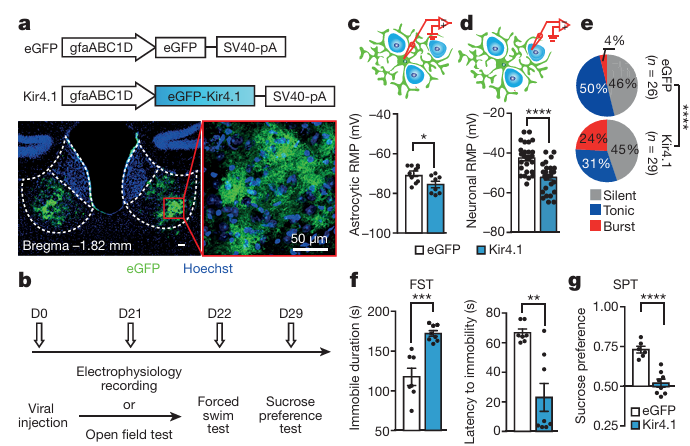
3. Nature, thesis title: Astroglial Kir4.1 in lateral habenula drives neuronal bursts in depression, revealing the mechanism of glial cells causing depression, and Kir4.1 channel becomes a new target for intervention
Core Highlights: The role of glial cells in the pathogenesis of depression has not been fully elucidated for a long time, and the interaction mechanism between them and neurons is still a research gap. Hu Hailan's team focused on the lateral habenula (LHb) and found that the potassium ion channel Kir4.1 in glial cells is a key molecule in inducing neuronal hyperpolarization and increased cluster discharge. Abnormal activation of this channel will directly drive LHb neurons into a depression-related cluster discharge state, which is an important upstream mechanism in the occurrence of depression. This discovery clarified for the first time the core role of glial cells in the pathogenesis of depression, identified the Kir4.1 channel as a new target for rapid antidepressant treatment, and enriched the multicellular regulation theory of depression.
Author information: Professor Hu Hailan is the corresponding author, and the team from the School of Brain Science and Brain Medicine of Zhejiang University is the core completing unit.
4. Nature, thesis title: Sustained antidepressant effect of ketamine through NMDAR trapping in the LHb, analyzing the long-acting antidepressant mechanism of ketamine, and NMDAR retention effect to achieve lasting efficacy
Core highlights: Ketamine has a half-life of only 13 minutes, but its antidepressant effect lasts for a week. This huge difference in pharmacokinetics and efficacy has not been explained for a long time. Hu Hailan's team found that ketamine, as a "trapped blocker", binds to the glutamate receptor (NMDAR) of the lateral habenula (LHb) neurons, and is "retained" in the receptor channel, making it difficult to dissociate, thereby evading the action of liver metabolic enzymes. Even if the drug is no longer detectable in the blood after 24 hours, it can continue to block LHb cluster discharges and maintain its antidepressant effect. This study reveals the unique pharmacochemical characteristics of ketamine's long-acting effects and provides direct theoretical guidance for optimizing clinical low-dose medication regimens and designing long-acting antidepressant drugs.
Author information: Professor Hu Hailan is the corresponding author. The core completion units include the School of Brain Science and Brain Medicine, Zhejiang University School of Medicine, the Frontier Science Center for Brain and Brain-Computer Integration of the Ministry of Education, the National Key Laboratory of Brain-Computer Intelligence, and the Liangzhu Laboratory. Ph.D. student Ma Shuangshuang and postdoctoral fellow Chen Min are the co-first authors.
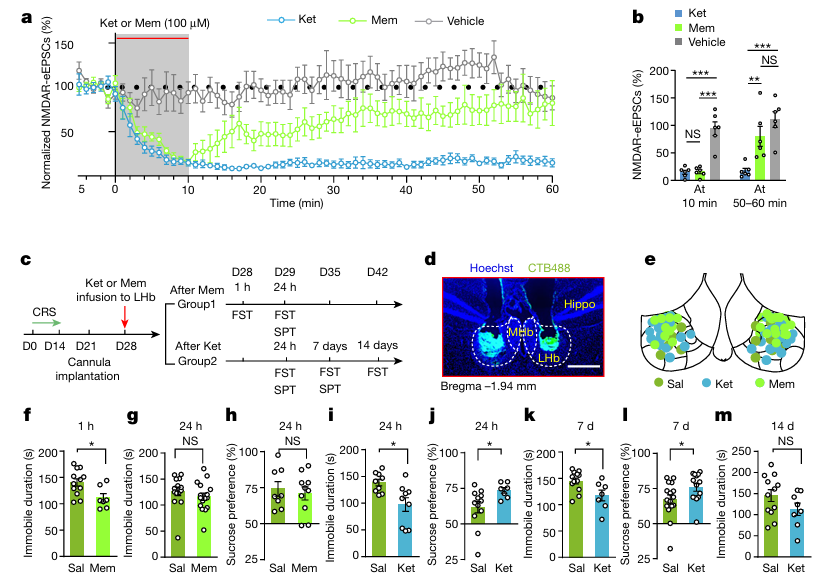
5. Science, thesis title: Brain region–specific action of ketamine as a rapid antidepressant, clarify the specific target of ketamine in the brain region, and analyze the relationship between upstream and downstream signaling pathways
Core Highlights: Why ketamine preferentially targets the lateral habenula (LHb) to exert antidepressant effects? Its brain region-specific mechanism and upstream and downstream signaling pathways are not yet clear. Based on previous research, Hu Hailan's team further revealed the neural basis for LHb becoming the preferred target brain area for ketamine, and clearly described for the first time the upstream and downstream signaling pathways from LHb to the hippocampus. This result completes the theoretical system of ketamine's antidepressant mechanism with the lateral habenula NMDAR as the core, provides a new perspective for understanding the brain region-specific effects of the drug, and also provides more accurate theoretical support for the optimization of clinical medication strategies and the development of new targeted drugs.
Author information: Professor Hu Hailan is the corresponding author, and the team from the School of Brain Science and Brain Medicine of Zhejiang University is the core completing unit.
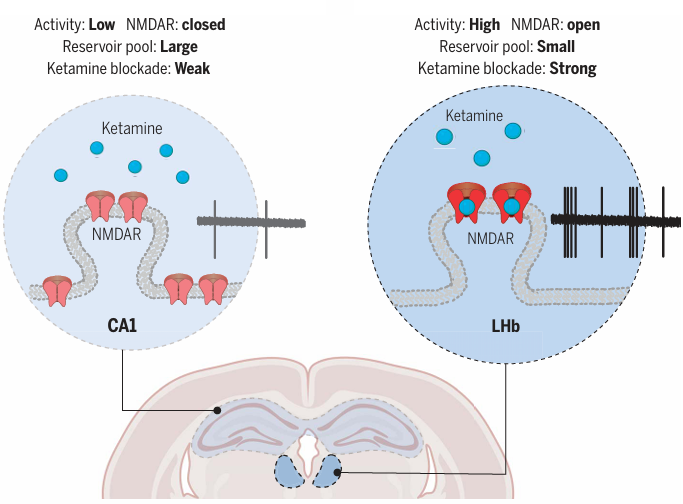
6. Cell, thesis title: Neuron-astrocyte Coupling in Lateral Habenula Mediates Depressive-like Behaviors, reveals the "iron triangle" loop of depression, and the cell interaction mechanism opens up new paths for prevention and treatment
Core Highlights: Depression has become a highly prevalent mental disorder in the world, but the dynamic cell interaction mechanism of stress-induced depression has not yet been clarified. Focusing on the two core cell groups of neurons and astrocytes, Hu Hailan's team drew the time-series map of brain pressure signal transmission for the first time and discovered a cyclic "iron triangle" neural network composed of lateral habenula (LHb) neurons, locus coeruleus noradrenergic (LC-NE) neurons and LHb astrocytes. Repeated activation of this circuit is a key trigger of depressive episodes, and also reveals that the core of norepinephrine (NE)'s regulation of depression lies in "release rhythm" rather than "total amount." This discovery breaks the traditional single-cell research paradigm and provides new diagnostic and treatment targets and strategies for stress management and depression prevention.
Author information: Professor Hu Hailan is the corresponding author, the School of Brain Science and Brain Medicine and the Dual Brain Center of Zhejiang University are the core completing units, and doctoral students Xin Qianqian and Wang Junying are the co-first authors.
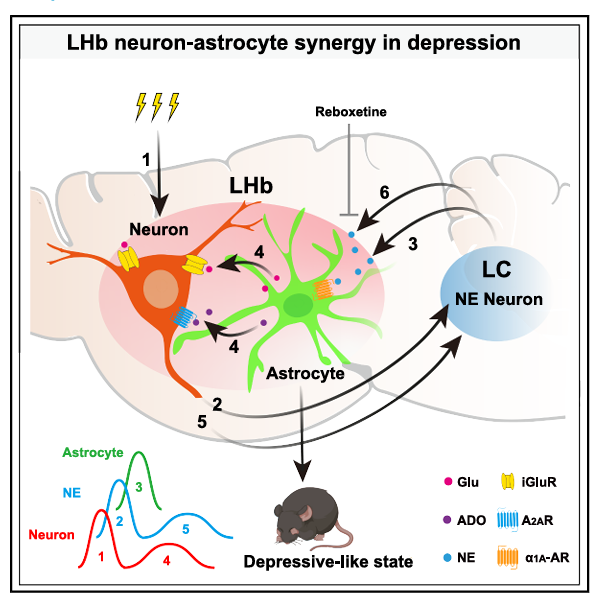
7. Science, thesis title: Bidirectional Control of Social Hierarchy by Synaptic Efficacy in Medial Prefrontal Cortex, regulating social hierarchy plasticity, synaptic efficacy in the prefrontal cortex becomes the core switch
Core highlights: The neural regulatory mechanisms and plasticity potential of social hierarchy have long been unclear, and there is a lack of direct intervention targets. Hu Hailan's team confirmed through animal experiments that the social status level of mice is relatively stable and transitive, and is highly correlated with the excitatory synaptic input strength of pyramidal neurons in layer V of the medial prefrontal cortex (mPFC) - the higher the level of mice, the higher the synaptic input strength. Enhancing the synaptic efficacy of neurons in the dorsomedial prefrontal cortex (dmPFC) through molecular manipulation can improve the social hierarchy of animals; otherwise, it can lead to a decrease in hierarchy. This study provides direct evidence for the first time that mPFC is involved in the regulation of social hierarchy, confirms the plasticity of social hierarchy, and provides a key target for intervention in social behavior-related disorders.
Author information: Professor Hu Hailan is the corresponding author, and the team from the School of Brain Science and Brain Medicine of Zhejiang University is the core completing unit.
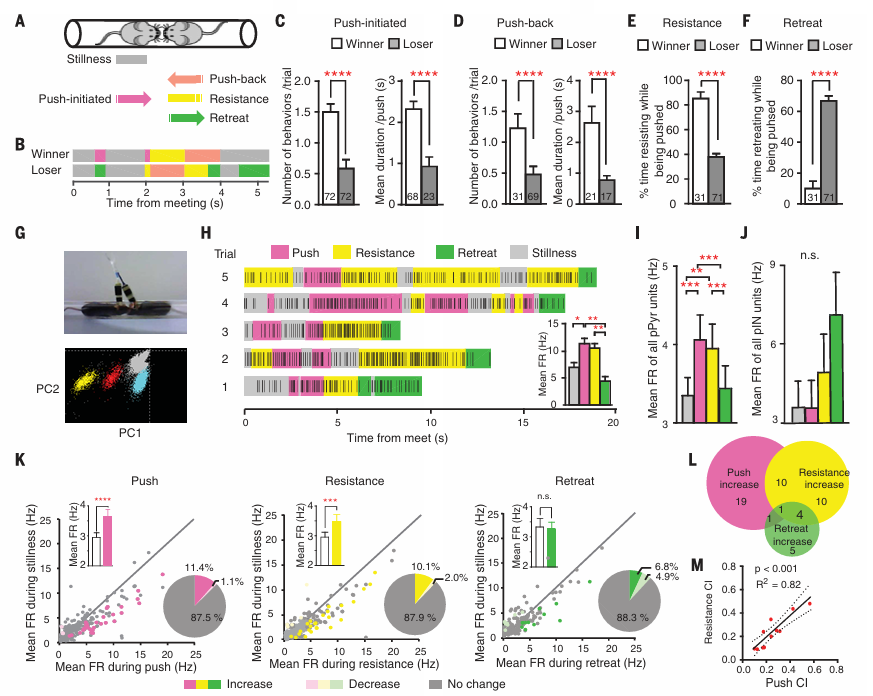
8. Science, thesis title: History of winning remodels thalamo-PFC circuit to reinforce social dominance, decoding the “winner effect” neural circuit, the thalamus-prefrontal pathway mediates competitive advantage
Core Highlights: The "winner effect" (the experience of past victories helps win subsequent competitions) is a key phenomenon in social competition, but its underlying neural circuits have long been unknown. Hu Hailan's team discovered for the first time that the neural circuit of "the dorsal raphe thalamus projects to the prefrontal cortex" in the mammalian brain is the core of mediating this effect. This loop transforms past victory experiences into subsequent competitive advantages by reshaping neural connections, making "winners win even more." This study established a framework of loop mechanisms for the formation of social competitive advantage, provided a new perspective for understanding adaptive and pathological social behavior, and also provided specific target brain areas for intervention in related social behavioral disorders.
Author information: Professor Hu Hailan is the corresponding author. The core completion units are the Institute of Systems Neuroscience and Cognitive Science and the Neuroscience Research Center of the School of Medicine, Qiushi Institute for Advanced Study, Zhejiang University. Doctoral students Zhou Tingting, Zhu Hong and Fan Zhengxiao are core participants.
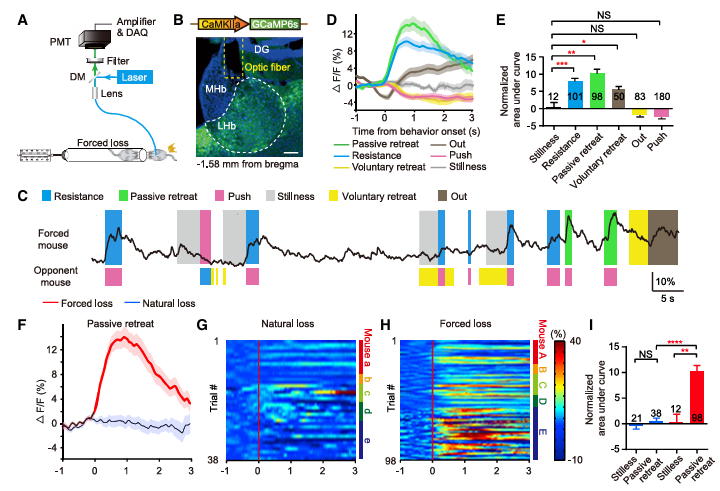
9. Cell, thesis title: Neural Mechanism Underlying Depressive-Like State Associated with Social Status Loss, reveals the depression-causing mechanism of loss of social status, and establishes the pathway associated with competition and emotion.
Core Highlights: Decline in social status is an important cause of depression, but the neural correlation mechanism between the two has not yet been clarified. Hu Hailan's team found that a decline in social status triggers negative reward prediction errors, which in turn activates the lateral habenula (LHb), the anti-reward center of the brain. On the one hand, the activation of LHb directly induces depressive-like behavior, and on the other hand, it inhibits the medial prefrontal cortex (mPFC), which is responsible for regulating social competitiveness, forming a vicious cycle of "status decline-depression-weakened competitiveness". The study also confirmed that ketamine treatment can improve the winning probability and social rank of mice that lose competition, while activating mPFC to restore social status can quickly improve depressive-like behavior, providing a dual theoretical basis for the intervention of depression induced by social factors.
Author information: Professor Hu Hailan is the corresponding author. The core completion units include the School of Brain Science and Brain Medicine of Zhejiang University, the Frontier Science Center for Brain and Brain-Computer Integration of the Ministry of Education, the National Key Laboratory of Brain-Computer Intelligence, and the Liangzhu Laboratory. Ph.D. student Fan Zhengxiao is the first author, and doctoral students Chang Jiarui and Liang Yilan have made important contributions.
Professor Hu Hailan is deeply engaged in research on the molecular and neural circuit mechanisms of emotion and social behavior, and has led the team to achieve major breakthroughs in the pathogenesis of depression and the neural basis of social competition. Her team identified multiple key molecular targets for depression such as βCaMKII and Kir4.1 channels, cracked the core mechanism of ketamine’s rapid and long-acting antidepressant, revealed the key role of lateral habenula-related neural circuits in the occurrence of depression, and also elucidated the neural mechanisms of social class regulation and loss of status that cause depression. These achievements have propelled my country's emotional neuroscience into the forefront of the world, providing important theoretical support and potential intervention paths for precise treatment and prevention in the field of mental health.
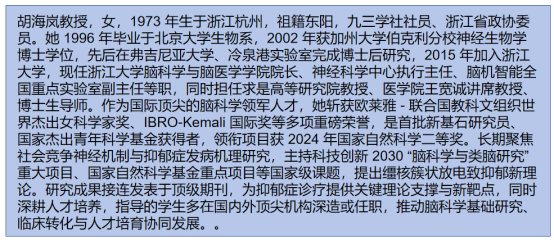
Introduction to Professor Hu Hailan: