Language



 z-bio
z-bio
 2025-07-03
 3195
3195
On May 19, the School of Biomedical and Health and School of Life Sciences and Technology of Huazhong Agricultural University held a patent transfer signing ceremony and a school-enterprise cooperation seminar. At the signing ceremony, the brain health team of Huazhong Agricultural University transferred the patent to Wuhan Luohua Biotechnology Co., Ltd. for a contract price of 12.1 million yuan, authorizing the company to develop H2S gas treatment plan for ischemic stroke.
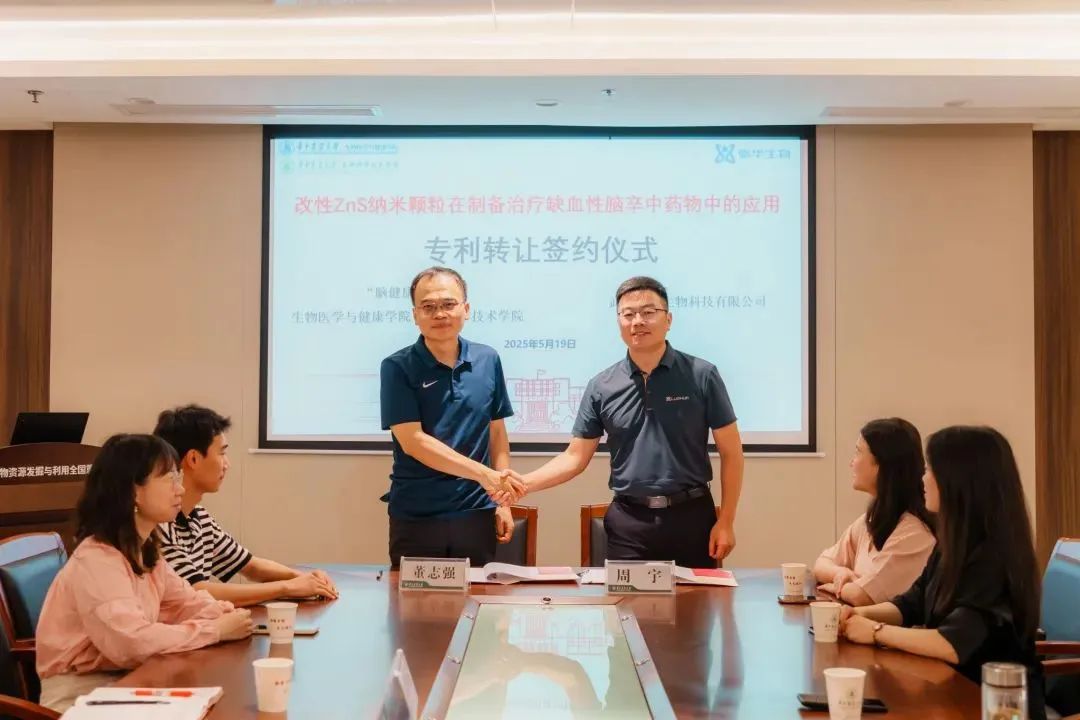
Professor Dong Zhiqiang, head of the Brain Health Team, introduced that stroke is one of the diseases with the highest mortality and disability rates in my country and is listed as the first major disease in Hubei Province's "323" campaign. The "Brain Health" team has been deeply engaged in the research on cellular and molecular mechanisms of nerve damage and protection after stroke, and has comprehensively used multidisciplinary means to develop new treatment plans. In recent years, the team has focused on the clinical transformation of nanomaterial technology. The modified zinc sulfide nanoparticles developed have significantly reduced the area of brain damage in animal models through multiple mechanisms such as gas treatment and inhibition of oxidative stress, and have good biosafety. The related technologies have been authorized by the national invention patent. "Every step from laboratory to industrialization, this achievement is closely linked to clinical needs, and in the future we will work with enterprises to accelerate the transformation process."
Zhou Yu, general manager of Wuhan Luohua Biotechnology Co., Ltd., said that since its establishment in 2019, the company has established in-depth cooperation with many universities, hospitals and pharmaceutical companies, focusing on the two major sectors of organoids and organ chips to provide services. Relevant organ chip technology can replace traditional animal experiments and significantly shorten the drug research and development cycle. This cooperation will integrate university innovation resources and enterprise technology platforms to promote the clinical transformation of modified ZnS nanoparticles.
Jin Anjiang, executive vice president of the School of Biomedical and Health, congratulated the implementation and transformation of this scientific and technological achievements. He said that the core goal of biomedical research is to solve the pain points of disease prevention and treatment and serve people's lives and health. As institutions such as the FDA gradually promote alternatives to animal experiments, organ chip technology will lead the transformation of drug research and development paradigm. This cooperation is not only an opportunity for technological breakthroughs, but also an innovative practice of interdisciplinary disciplines and talent training.
Fan Jinfeng, Secretary of the Party Committee of the School of Life Science and Technology, highly affirmed Luo Hua Biology's achievements in the entire industrial chain of organoids and organ chips. She advocated that relying on the company's resource advantages, market advantages, and school's talent advantages and platform advantages to strongly combine, explore the "dual mentor system" and joint research model, promote the coordinated development of the innovation chain and the industrial chain, and contribute scientific and technological strength to the construction of a healthy China.